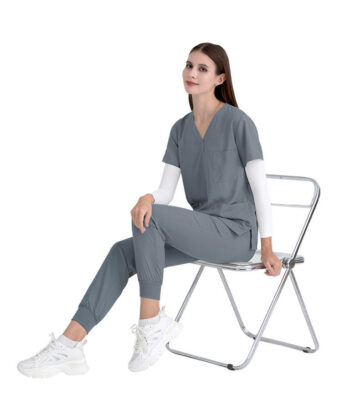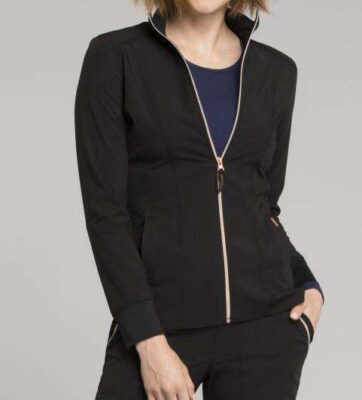



Healthcare facilities are often air-conditioned around the clock, making lightweight warmth a necessity for doctors, nurses, and technicians.
However, bulky layers hinder mobility and trap excess heat during active work.
Modern scrub jackets must therefore provide thermal comfort without weight — a balance achieved through intelligent material selection and precise garment engineering.
This article explains how B2B buyers and apparel brands can specify the right lining and fill options to deliver comfort, compliance, and durability.
🧥 1. The Role of Layering in Scrub Jackets
Unlike outerwear, scrub jackets are worn indoors, so insulation needs differ from traditional coats.
The goal is to maintain skin-level warmth between 22–26°C without overheating.
This balance depends on three layers:
-
Shell fabric — provides structure and abrasion resistance.
-
Insulation layer — traps air for thermal retention.
-
Lining — adds softness, regulates moisture, and reduces friction.
When correctly combined, these layers keep the wearer comfortable during long shifts and frequent temperature changes between wards and corridors.
🧵 2. Choosing the Right Insulation
Healthcare uniforms demand insulation that’s light, breathable, and easy to launder.
Common options include:
-
Polyester batting (60–80 gsm): lightweight and hypoallergenic.
-
Microfiber fill: soft, compressible, and ideal for slim-profile jackets.
-
3D spiral hollow fiber: enhanced resilience for repeated wash cycles.
-
Recycled insulation fibers (rPET): eco-friendly alternative with similar warmth-to-weight ratio.
For institutional programs, many Scrub Jackets Manufacturers pre-laminate these fills to prevent clumping or shifting during industrial laundering.
🌬️ 3. Selecting Linings for Comfort and Hygiene
A well-chosen lining can transform wearer comfort.
Healthcare environments favor non-static, antibacterial, and quick-dry linings, such as:
-
Brushed tricot or microfiber for softness and thermal stability.
-
Moisture-wicking mesh for active departments.
-
Antimicrobial polyester for hygiene-sensitive areas.
Avoid heavy cotton or fleece linings — they retain moisture and dry slowly under hospital laundry cycles.
Some manufacturers integrate silver-ion treatments into linings for added bacterial control without compromising breathability.
⚙️ 4. Engineering Warmth Without Weight
Achieving warmth without bulk requires design precision.
Techniques include:
-
Box quilting or stitch-through patterns to evenly distribute fill.
-
Thermal bonding for minimal needle puncture and improved insulation retention.
-
Slim side panels using stretch fabrics for better mobility.
-
Drop-shoulder or raglan sleeves to accommodate layering flexibility.
The ideal scrub jacket should feel as light as a shirt but deliver the insulation efficiency of a mid-layer outerwear piece.
🧪 5. Testing for Durability and Performance
All insulating and lining materials should be tested for:
-
Dimensional stability after 50 washes (AATCC 150)
-
Colorfastness to bleach (AATCC 61)
-
Thermal resistance (ISO 11092)
-
Fiber migration or fill shifting
Quality suppliers typically provide data-backed certification reports to verify that warmth and appearance remain stable throughout the garment’s service life.
🌿 6. Sustainable Alternatives in Insulation
The healthcare apparel industry is rapidly adopting eco-conscious fills.
Options like recycled polyester insulation (rPET) and bio-based down alternatives allow hospitals and brands to align with sustainability initiatives without sacrificing performance.
Using solution-dyed fibers further reduces water and energy consumption during production — a selling point for both B2B and retail customers.
📋 7. Procurement Considerations for Buyers
When sourcing scrub jackets, uniform buyers should specify:
-
Fill type and GSM range (e.g., 70 gsm bonded polyester).
-
Lining fabric composition and antibacterial features.
-
Wash test requirements and approval sample stages.
-
Consistency in shell and lining color for aesthetic alignment.
Buyers working with professional Scrubs Manufacturers gain access to vertically integrated facilities — from insulation lamination to final assembly — ensuring consistency across all batches.
Conclusion
The best scrub jackets keep medical professionals warm, agile, and confident, even during long shifts.
Through strategic material choices, lightweight fills, and durable linings, healthcare brands can deliver warmth without bulk — style without compromise.
By collaborating with specialized scrub jackets manufacturers and reliable Scrubs Manufacturers, procurement teams can create insulated uniforms that meet modern expectations for comfort, sustainability, and professional appearance.