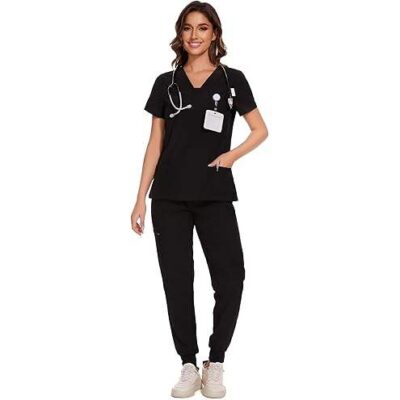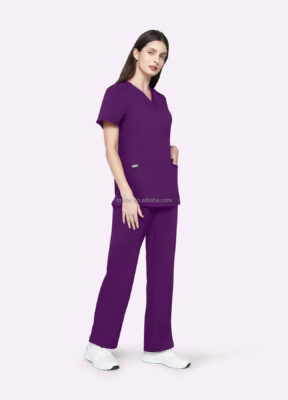



In healthcare facilities, scrubs endure far more than typical domestic laundering.
They face hot water, disinfectants, mechanical agitation, and drying tunnels every day. These conditions can quickly damage fabric structure, fade colors, and reduce garment lifespan if the material isn’t engineered correctly.
For hospitals, distributors, and uniform program managers, verifying industrial laundry resistance before mass production is essential. This article outlines the tests and benchmarks every B2B buyer should require from their suppliers.
🧪 1. Why Industrial Laundry Testing Matters
Scrubs are more than apparel—they’re protective workwear.
Failure in laundering resistance means higher replacement costs, inconsistent brand image, and even hygiene risks if coatings deteriorate prematurely.
That’s why every bulk program should include verified laundry performance data during the supplier qualification phase.
Reliable Scrubs Manufacturers perform pre-production simulations that replicate real industrial conditions: high-temperature washing (up to 90°C), mechanical stress, and chemical exposure. These tests help prevent performance complaints once garments are in hospital rotation.
🧵 2. Key Performance Tests to Request
B2B buyers should demand standardized, third-party test reports rather than in-house claims.
The following tests are industry essentials:
-
AATCC 61 / ISO 105-C06 — Colorfastness to washing
-
AATCC 132 — Colorfastness to dry cleaning and sterilization
-
ASTM D3886 — Abrasion resistance
-
AATCC 8 / ISO 105-X12 — Colorfastness to rubbing
-
AATCC 150 — Dimensional change after repeated laundering
-
ASTM D3512 — Pilling resistance
A comprehensive test package ensures that scrubs maintain both appearance and structural integrity after multiple wash cycles.
♻️ 3. Typical Hospital Laundry Conditions
Industrial laundries used by hospitals and cleaning contractors operate differently from home washers:
-
Water temperature: 70–90°C
-
Chemicals: chlorine bleach, alkali detergents, hydrogen peroxide
-
Cycle duration: 45–60 minutes
-
Drying: tunnel dryers or high-spin extractors
Under these harsh environments, standard consumer-grade fabrics fail quickly.
Procurement managers should therefore specify minimum wash durability in tender documents (usually 50–100 cycles without performance degradation).
⚙️ 4. How to Simulate Laundering During Sampling
Before committing to bulk orders, run accelerated laundering tests on pre-production samples:
-
Launder samples using the intended hospital cleaning formula.
-
Measure color change (ΔE), shrinkage, and surface texture after 25 and 50 cycles.
-
Evaluate logo embroidery and print adhesion.
-
Inspect seam puckering, thread breakage, and pocket deformation.
This process not only validates fabric performance but also helps identify stitching or construction weaknesses early.
🧵 5. Fabric and Thread Recommendations
Certain fabric blends outperform others under industrial laundering:
-
65/35 polyester-cotton twill: the industry standard for durability.
-
100% polyester microfibre: superior color retention, lightweight, and quick-drying.
-
Core-spun polyester threads: resist shrinkage and chlorine degradation.
Avoid untreated cotton fabrics or low-grade blends—they tend to shrink, fade, and lose tensile strength rapidly.
🧷 6. Finishing and Coating Considerations
Finishes such as antimicrobial, stain release, or moisture wicking may reduce performance after repeated washes if not applied properly.
To ensure durability:
-
Require wash-retention test reports for all chemical finishes.
-
Check binder types and curing temperatures used in finishing.
-
Specify coating reactivity under high-alkaline detergents.
A credible factory will disclose these finishing parameters and provide independent verification.
📦 7. Supplier Quality Control and Sampling
For B2B buyers managing hospital tenders or retail programs, consistency is key.
Here’s how to maintain control:
-
Include laundry durability criteria in your purchase specification sheet.
-
Require pre-production sample approval after simulated wash testing.
-
Use bulk inspection reports comparing initial and post-wash performance.
-
Keep retained samples from each shipment for traceability.
Buyers working with Scrubs Wholesale suppliers can easily standardize testing and documentation across multiple factory partners for large institutional orders.
🔍 8. Lifecycle Cost Analysis
Choosing fabrics that withstand 80–100 wash cycles might seem costlier initially, but they drastically reduce replacement frequency and inventory waste.
A well-constructed uniform program balances:
-
Fabric strength
-
Wash durability
-
Replacement schedule
-
Total cost per wear
Procurement decisions should be made not just on price per unit but on cost per usage cycle—a metric that defines long-term efficiency.
Conclusion
Industrial laundry testing is the foundation of reliable healthcare uniforms.
Durable fabrics, certified finishes, and strong construction ensure safety, hygiene, and brand consistency.
By collaborating with professional scrubs manufacturers and verified scrubs wholesale partners, buyers can safeguard quality across global supply chains—ensuring every uniform performs as well on the 100th wash as it did on the first.